
Sitting All Day? Why Tiny Movements Matter More Than You Think (Especially for Women Over 40)
Sitting All Day? Why Tiny Movements Matter More Than You Think (Especially for Women Over 40)
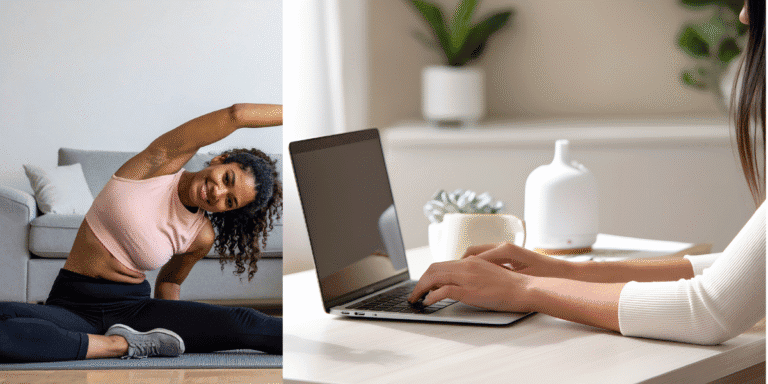
You can be productive all day and still feel like your body is falling apart by 3 p.m. If you’re a woman over 40 and you work online, you probably know the routine: laptop open, meetings stacked, tasks back to back, and you barely notice you haven’t moved until you stand up and everything feels tight.
The good news is you’re not broken, and you don’t need to “push harder” in your workouts to fix this. What usually helps most is tiny movements during the day, the kind that interrupt stillness before it turns into aches, foggy focus, and that heavy, tired feeling.
The Hidden Toll of Desk Life
Sitting long hours can look harmless because it doesn’t feel like “effort.” You’re just working. You’re just typing. You’re just listening on Zoom. But your body keeps score, and it usually speaks up when you finally pause.
Who feels this most?
If you’re building or running anything online, you’re likely doing a lot of this:
- Sitting at your desk for long stretches
- Living on your laptop, even when you’re “off”
- Taking meetings that keep you still longer than you planned
- Staying focused on output, not posture or comfort
This hits hard for women over 40 because your body often feels less forgiving than it did in your 20s and 30s. Not because you’re doing something wrong, but because time changes how quickly you stiffen up and how long it takes to bounce back.
When your body becomes an afterthought
Most days, your body is in the background. You’re thinking about deadlines, emails, clients, your calendar, and the thousand little things that keep work moving.
Then you stand up and think, my body is kind of an afterthought until it isn’t.
Common aches from sitting long hours
Your discomfort tends to show up in predictable places.
Neck stiffness hits first
You stand up and your neck feels stiff. Turning your head feels crunchy or tight, like your muscles forgot how to move smoothly.
Heavy shoulders build up
Your shoulders feel heavy. They creep upward while you work, then stay there. By the end of the day, it can feel like you’ve been carrying a bag of bricks.
Lower back complaints
Then your lower back complains, sometimes quietly at first, then louder as the day goes on:
- Standing up triggers it, like your body resents the change.
- Mid-afternoon makes it worse, when fatigue and stillness pile up.
None of this is rare. It’s common. It’s also fixable, but not in the way you’ve probably been taught to think about movement.
Why You Feel Tired After Just Sitting
There’s a weird moment that happens when you’ve “only” sat all day, but you feel completely wiped. You didn’t run errands. You didn’t lift anything heavy. You didn’t even leave your house. And still, you’re drained.
Focus drops in the afternoon
By mid-afternoon, your focus just drops. You’re staring at the screen, rereading the same line, and wondering, why do I feel so tired when all I’ve done is sit.
That question makes sense. Sitting doesn’t feel like work for your body, but long stillness asks a lot from your system.
It’s not your fault
This is where many people get stuck, because it’s easy to turn this into a personal flaw. It’s not.
Not doing anything wrong
You need to hear this clearly: you’re not doing anything wrong. You’re not lazy. You’re not weak. You’re responding to a normal physical pattern.
No need for harder workouts
It’s also not that you need to work out harder. Hard workouts can be great, but they don’t erase what happens when your body stays still for hours every day.
The real culprit: long periods of stillness
Long periods of stillness ask too much of the body, especially as we grow older. Your body was built for regular movement, not just one intense session and then a full day of being parked in a chair.
Think of it like watering a plant. One huge soak once a week doesn’t always work as well as small, steady waterings that keep things balanced.
Your body tends to do better with movement that’s:
- Frequent
- Simple
- Spread throughout the day
- Low-pressure
How stillness changes your body
When you sit without breaks, your body adapts to that position. It’s not being dramatic, it’s just doing what bodies do: adjusting to what you repeat.
Joints start to stiffen
Your joints start to stiffen, especially in your hips, upper back, and neck. The “motion” they’re used to stops showing up, so movement starts to feel less natural.
Muscles tighten up
Your muscles tighten too. Your hip flexors shorten, your chest can pull forward, and your upper back may round. Then when you finally move, it can feel like everything is stuck.
Over time, this pattern can feed that foggy, low-energy feeling you can’t quite shake.
Movement Got Misunderstood
A lot of women over 40 weren’t taught to see movement as something you weave into the day. Movement got sold as a separate event, something you “do” only when life is perfectly set up for it.
The all-or-nothing trap
Somewhere along the line, movement got framed like it requires:
- An hour (or more)
- The right clothes
- The right mindset
- Enough motivation
And if you don’t have all that, you do nothing.
That’s the trap. It makes movement feel like a big decision instead of a normal part of being in your body.
What happens without interruption
When you sit for hours without interruption, your body starts treating stillness as the default. It gets good at what you practice, and you’re practicing not moving.
This is why a full workday can leave you feeling sore and sluggish, even if your schedule looked “easy” on paper.
Circulation and energy effects
Stillness affects more than muscles and joints.
Circulation slows
When you stay in one position too long, circulation can slow. That can contribute to that heavy, dull feeling in your body, like your energy is stuck.
Your nervous system gets foggy
Your nervous system can also shift into a low-energy foggy state. You’re awake, but not sharp. You’re working, but it feels like you’re pushing through mud.
End-of-day drain
By the end of the day, you can feel drained, unfocused, and physically uncomfortable, even if you haven’t done anything hard.
That’s one of the most frustrating parts. You did the work, you were “good,” you stayed on task, and your body repays you with stiffness.
The pattern becomes normal
The longer this goes on, the more normal it starts to feel. You might start thinking:
- “This is just what work feels like.”
- “I guess my body can’t handle sitting long hours anymore.”
- “This is just aging.”
But a lot of that “normal” is just a pattern that’s been repeated long enough to feel permanent.
Time for a Mindset Shift About Movement
If you’re used to thinking that movement has to be a workout, this is where things can change fast. You don’t need to train harder. You need to move more often.
Redefine what counts as movement
Movement doesn’t have to mean workouts. It doesn’t have to mean sweating. It doesn’t have to mean intensity.
Sometimes movement is just reminding your body, over and over, that it isn’t meant to stay frozen for six hours straight.
Tiny movements that work during your workday
Small movements are simple on purpose. You can do them in normal clothes, in a small space, with no prep.
Stand up simply
Just standing up changes your body’s position and pressure points. It gives your joints a new angle and your spine a break from the same shape.
Roll your shoulders
Rolling your shoulders can soften that tight, raised feeling that builds during screen time. It can also interrupt the habit of holding tension without noticing.
Turn your neck gently
Turning your neck gently reminds your neck that it still moves. You’re not forcing anything, you’re just giving it range again.
Quick walks and arm switches
You don’t need a long break for this to help.
Walk for 2 minutes
Walking for 2 minutes counts. It gets your legs moving, wakes your system up, and can shift your mood faster than you’d expect.
Arms overhead
Switching your arms overhead can open your chest and upper body, especially if you spend hours with your hands forward on a keyboard.
The power of consistency
Here’s the part that matters most: tiny movements done consistently change how your body feels.
They send a message your system understands: you’re safe, you can reset. You don’t have to brace. You don’t have to lock up.
You don’t have to “lock up” anymore
A lot of stiffness is your body trying to stabilize you because it thinks you’re stuck. When you move a little, often, you show your body it can stay flexible.
It’s like loosening a knot before it becomes a rope you can’t untangle.
Why Small Movements Often Beat Big Workouts (When You Sit Long Hours)
Big workouts can be great. They can build strength, improve stamina, and make you feel proud of yourself. The issue is what happens when workouts become the only movement you think “counts.”
What you notice in real life
You might recognize this pattern:
- You plan workouts, then life gets busy.
- You miss a few days, then you feel like you failed.
- You try to “make up for it” with something intense.
- You stop again because it feels like too much.
This cycle isn’t a character problem. It’s a system problem. It asks for perfection, then punishes you when you can’t give it.
Big workouts are great when they happen
When you can do a full workout, it’s a win. No argument. The problem is consistency, not effort.
If they’re inconsistent, they don’t help your workday much
If your workouts are random, they might not change how your body feels during the hours you’re actually sitting at your desk. You’re still spending most of your week in long stretches of stillness.
That’s why small movements during the day often have a bigger impact on daily comfort.
Small movements change how your body feels while you work
When you move in small ways regularly:
- You reduce stiffness before it builds up.
- You keep your energy more stable.
- You feel less “stuck” when you shift positions.
- Your body feels more like a partner and less like a complaint department.
This matters because your workday is where you live. It’s not just about how you feel at the gym. It’s about how you feel on Tuesday at 2:47 p.m. when you still have three things to finish.
Stiffness prevention beats stiffness recovery
Once stiffness is fully set in, it takes longer to undo. Tiny movement breaks can stop the buildup.
You’re not trying to fix a problem at the end of the day. You’re interrupting it before it grows.
Your energy stays steadier
Long stillness can make your energy crash. Small movement can bring you back online, without needing caffeine or a pep talk.
Even if your schedule can’t change, your body can feel different inside that schedule.
How Tiny Movements Support Focus (And Your Mood)
When your body feels better, your work feels easier. Not because the tasks change, but because you’re not dragging a tired, tense body through every step.
Focus lasts longer when your body isn’t stuck
A stiff body is distracting. So is discomfort you’re trying to ignore. Tiny movements reduce that background noise.
When you move, you often notice:
- Your eyes feel less strained
- Your breathing feels less shallow
- Your mind feels less scattered
Your brain and body are not separate departments. They’re sharing the same space.
It feels doable, even on busy days
This is the quiet power of small movement. It doesn’t require a hype speech.
You don’t need motivation for 30 seconds
You don’t need motivation to stretch your shoulders for 30 seconds. You can do it while a file downloads or while you’re reading an email.
You don’t need willpower between tasks
You don’t need willpower to stand up between tasks. You can pair it with something you already do, like finishing a call, sending a message, or hitting save.
You don’t need permission to start
A lot of women over 40 wait for the “right” time, the time when it will be done properly. But your body doesn’t need perfect. It needs frequent reminders that you’re allowed to move.
Stopping the wait is a form of support.
Your Body Is Part of Your Work (Not Separate From It)
It’s easy to treat your body like something you deal with after work. Like you’ll stretch later, walk later, take care of it later.
But if you spend sitting long hours at a desk, your body is involved the whole time.
When your body feels better, work feels easier
This is one of the clearest shifts you can notice. When your neck and shoulders aren’t tight, you don’t have to fight yourself to stay at your desk.
Work still takes effort, but it takes less friction.
You think more clearly
A body that feels cramped and stuck can pull your attention away from what you’re trying to do. When you loosen up, your thoughts often feel cleaner.
Not perfect, just clearer.
You’re less irritable
Discomfort makes you snappy. It makes small problems feel bigger. When you feel better physically, your patience often lasts longer.
You move through tasks with less resistance
When your body is screaming for a break, every task feels heavier. When your body feels supported, you can move through your list with less dragging and stopping.
Supporting your body is practical
Supporting your body isn’t self-indulgent. It’s practical.
If your work depends on your attention, your decision-making, and your ability to stay steady, then your physical state is part of your work setup, just like your laptop and your Wi-Fi.
Challenge the Thoughts That Keep You Stuck
A lot of the problem isn’t knowing what to do. It’s the story you tell yourself about when you’re “allowed” to do it.
“I’ll move when I have more time”
If you’ve been telling yourself you’ll move when life calms down, you might be waiting a long time. Work expands. Schedules fill. Something always comes up.
Tiny movement works because it fits into the life you have right now.
“I’ll start when I can do it properly”
This one sounds responsible, but it often keeps you stuck. “Properly” tends to mean big changes, perfect routines, and a plan you can follow every day.
Real life doesn’t work like that.
What if small, imperfect movement is enough?
Try this thought instead: what if small, imperfect movement right where you are is actually enough?
Not as a compromise. As a real strategy.
Shift the goal: interrupt stillness more often
The goal isn’t doing more. The goal is interrupting stillness more often.
That’s it.
It’s a simple aim that respects your workday and your energy.
Make It Happen Without Overhauling Your Life
You don’t need to turn your day upside down. You don’t need a perfect routine. You don’t need to become a different person.
You don’t need a life overhaul
If you’re already busy, adding a massive new plan usually backfires. It creates pressure. Then when you can’t keep up, you drop the whole thing.
Small movement avoids that spiral.
Skip the “perfect routine” mindset
A perfect routine can turn into another job. The point is to support yourself, not create another standard you have to meet.
Consistency matters more than complexity.
The biggest shift comes from the smallest moves, repeated
A shoulder roll. A stand. A two-minute walk. Arms overhead. A gentle neck turn.
Repeated day after day, these small actions change your baseline. Your body starts to expect movement again, and it stops acting like stillness is the only option.
Your Simple Start Today
If this idea hits home, keep it simple. You don’t need a plan. You need a moment.
Take a moment now
Before the day ends, take a moment to check in. Notice your shoulders. Notice your jaw. Notice your lower back.
Then do something small.
Three quick actions to try
- Stand up between tasks, even if it’s for a few breaths.
- Stretch your shoulders or reach your arms overhead for 30 seconds.
- Walk for 2 minutes, even if it’s just around your home.
Not because you should
Do it, not because you’re trying to be “good,” but because it changes how you feel in your own body.
Your body helps you show up
Your body is part of how you show up in your work. When you support it with tiny movements, you give yourself a better chance to stay focused, steady, and comfortable, even when you’re sitting long hours.
Conclusion
If you’re a woman over 40 who works online, long stretches of sitting can quietly drain your energy and lock up your body. You don’t need harder workouts to fix that. You need small movement breaks that interrupt stillness before it turns into stiffness and brain fog. Start with one small reset today, then repeat it tomorrow, because your body is part of your work, and it deserves support while you’re doing it.
20 Comments